I was standing in my tiny kitchen, staring at a half‑empty pantry and a sudden, irrational craving for something that tasted like a midnight ramen run in Tokyo. The only thing that could have satisfied that craving was a bowl of hot, slurpy noodles that felt like a hug from a long‑lost friend. I grabbed a cheap packet of Maruchan, tossed in a handful of whatever veggies I could find, and ended up with a disaster that tasted like cardboard soaked in broth. That failure sparked a mission: to create the ultimate quick homemade ramen that would make even the most seasoned noodle‑head bow down.
Picture this: the kitchen filled with the aroma of garlic and ginger sizzling in butter, the broth bubbling like a cauldron of comfort, and the steam rising in lazy curls that kiss your face. You hear the faint pop of dried shiitake mushrooms rehydrating, the soft hiss of noodles sliding into the pot, and the occasional clink of a spoon against the pot’s rim. Your eyes are drawn to the deep amber broth, speckled with bright orange carrots and glossy green kale, while the texture of the noodles is a perfect balance between springy and tender. The heat from the pot warms your hands, and the anticipation builds like a drumroll before a fireworks show.
What makes this version stand out is the deliberate layering of flavor and texture, all while keeping the prep time under thirty minutes. Most ramen shortcuts either drown the noodles in a salty packet or skimp on the broth, leaving you with a bland, one‑dimensional bowl. I dared to combine a simple chicken or vegetable broth with the umami punch of dried shiitake, a splash of soy, and a whisper of chili oil, creating depth that rivals restaurant‑grade bowls. The secret weapon? A quick toast of garlic and ginger that coats the broth like velvet, delivering an aromatic punch that lingers on the palate.
And here's the kicker: I’m about to reveal a technique that most home cooks overlook — the “double‑infuse” method, where you first steep the dried mushrooms in hot water, then use that liquid as part of your broth base. It adds a mushroomy richness without any extra effort. Let me walk you through every single step — by the end, you'll wonder how you ever made it any other way.
What Makes This Version Stand Out
- Umami Explosion: The combination of dried shiitake broth and a splash of soy creates a depth that mimics slow‑cooked bone broth, delivering a savory punch in minutes.
- Texture Harmony: Al dente noodles meet crisped panko and silky soft‑boiled eggs, giving you a mouthfeel that’s both hearty and delicate.
- Speedy Simplicity: All ingredients are pantry‑friendly and the entire process stays under thirty minutes, perfect for busy weeknights.
- Flavor Flexibility: Swap chicken broth for veg, add miso for extra depth, or crank up the chili oil for a fiery kick — the base is a blank canvas.
- Crowd‑Pleaser Factor: This bowl has been known to turn skeptics into ramen addicts; I dare you to taste this and not go back for seconds.
- Ingredient Quality: Using real garlic, fresh ginger, and quality dried mushrooms makes the broth sing, unlike the generic flavor packets.
- One‑Pot Efficiency: Minimal cleanup means you can focus on eating, not scrubbing, which is a win for any home chef.
- Make‑Ahead Magic: The broth can be pre‑made and stored, turning this into a quick assemble‑and‑heat meal for the next day.
Inside the Ingredient List
The Flavor Base
Garlic and ginger are the dynamic duo that ignite the broth with aromatic fire. Freshly minced garlic releases a sweet, caramelized note when sautéed, while ginger adds a bright, peppery zing that cuts through the richness. If you skip them, the broth will feel flat, like a song missing its chorus. A good swap for garlic is roasted shallots, and for ginger you can use a dash of ground ginger, though the fresh version wins every time. When shopping, pick firm ginger with smooth skin; a little bruising means it’s past its prime.
The Texture Crew
Ramen noodles are the heart of the dish, and the classic Maruchan package works like a charm because it cooks quickly and has that perfect springy bite. If you prefer a chewier texture, try fresh ramen noodles from the Asian aisle. The veggies — carrots and kale — add crunch and color; carrots bring a subtle sweetness while kale contributes an earthy depth. Missing the veggies? You can swap in bok choy or spinach, but remember each green will wilt differently, affecting the final mouthfeel.
The Unexpected Star
Dried shiitake mushrooms are the secret weapon that turns a simple broth into a luxurious elixir. Their deep, smoky flavor is concentrated, and the soaking liquid becomes a golden, mushroom‑infused stock. If you don’t have shiitake, try dried porcini or even a splash of mushroom soy sauce. When selecting shiitake, look for caps that are dark, dry, and slightly cracked — that’s a sign they’re mature and packed with flavor.
The Final Flourish
Toppings are where you get to personalize the bowl. A drizzle of chili oil adds a smoky heat that dances on the tongue, while panko provides a crunchy contrast that shatters like thin ice. Soft‑boiled eggs, halved and marinated in soy, give a creamy richness that ties everything together. If you’re feeling adventurous, toss in a handful of toasted sesame seeds or a splash of yuzu juice for citrus brightness. Skipping the toppings makes the bowl feel incomplete — it’s like serving a movie without its climax.
Everything's prepped? Good. Let's get into the real action...
The Method — Step by Step
-
Start by gathering all your ingredients on the counter; this visual layout prevents frantic rummaging later. Heat a large pot over medium‑high heat and add a tablespoon of neutral oil. Once the oil shimmers, toss in minced garlic and ginger, stirring constantly for about 30 seconds until you hear a gentle sizzle that signals the aromatics are waking up. This is the moment of truth – the scent should be fragrant, not burnt.
Kitchen Hack: Use a silicone spatula to scrape the bottom of the pot; it prevents the garlic from sticking and releases more flavor. -
While the aromatics are dancing, place the dried shiitake mushrooms in a separate bowl and cover them with hot water. Let them soak for 10 minutes; they’ll plump up and release a dark, earthy liquid. Once softened, slice the caps thinly and set the soaking liquid aside — this is liquid gold for your broth. If you’re impatient, a quick microwave zap for 2 minutes works, but the traditional soak yields richer flavor.
-
Pour the reserved mushroom soaking liquid into the pot, followed by 8 cups of chicken or vegetable broth. Bring the mixture to a gentle boil, then lower the heat to a simmer. Add a splash of soy sauce (about 2 tablespoons) and a teaspoon of sesame oil for depth. Let the broth simmer for 5 minutes, allowing the flavors to meld; you’ll notice a subtle darkening and a fragrant steam that fills the kitchen.
Watch Out: Keep the broth at a gentle simmer, not a rolling boil, or the delicate flavors will become harsh and the noodles may overcook. -
While the broth simmers, bring a separate pot of water to a rapid boil. Add the ramen noodles and cook according to the package instructions, usually 3 minutes. Stir occasionally to prevent sticking. As soon as they’re al dente, drain them and rinse briefly under cold water to stop the cooking process — this keeps the noodles firm when they meet the hot broth later.
-
Now, turn your attention to the veggies. Slice carrots into matchstick‑thin strips and roughly chop kale into bite‑size pieces. Add the carrots to the simmering broth first; they need a minute longer to soften. After 2 minutes, toss in the kale and sliced shiitake caps, letting them wilt for another minute. The vegetables should retain a slight crunch, providing a textural counterpoint to the noodles.
-
While everything is cooking, prepare the toppings. Lightly toast panko in a dry skillet until golden brown; it should smell nutty and have a crisp that shatters when bitten. Soft‑boil four eggs for exactly 6 minutes, then plunge them into ice water to halt cooking. Peel and halve the eggs, then drizzle each half with a few drops of soy sauce for an extra umami punch.
Kitchen Hack: For perfectly centered yolks, start the eggs in cold water and bring them to a boil together. -
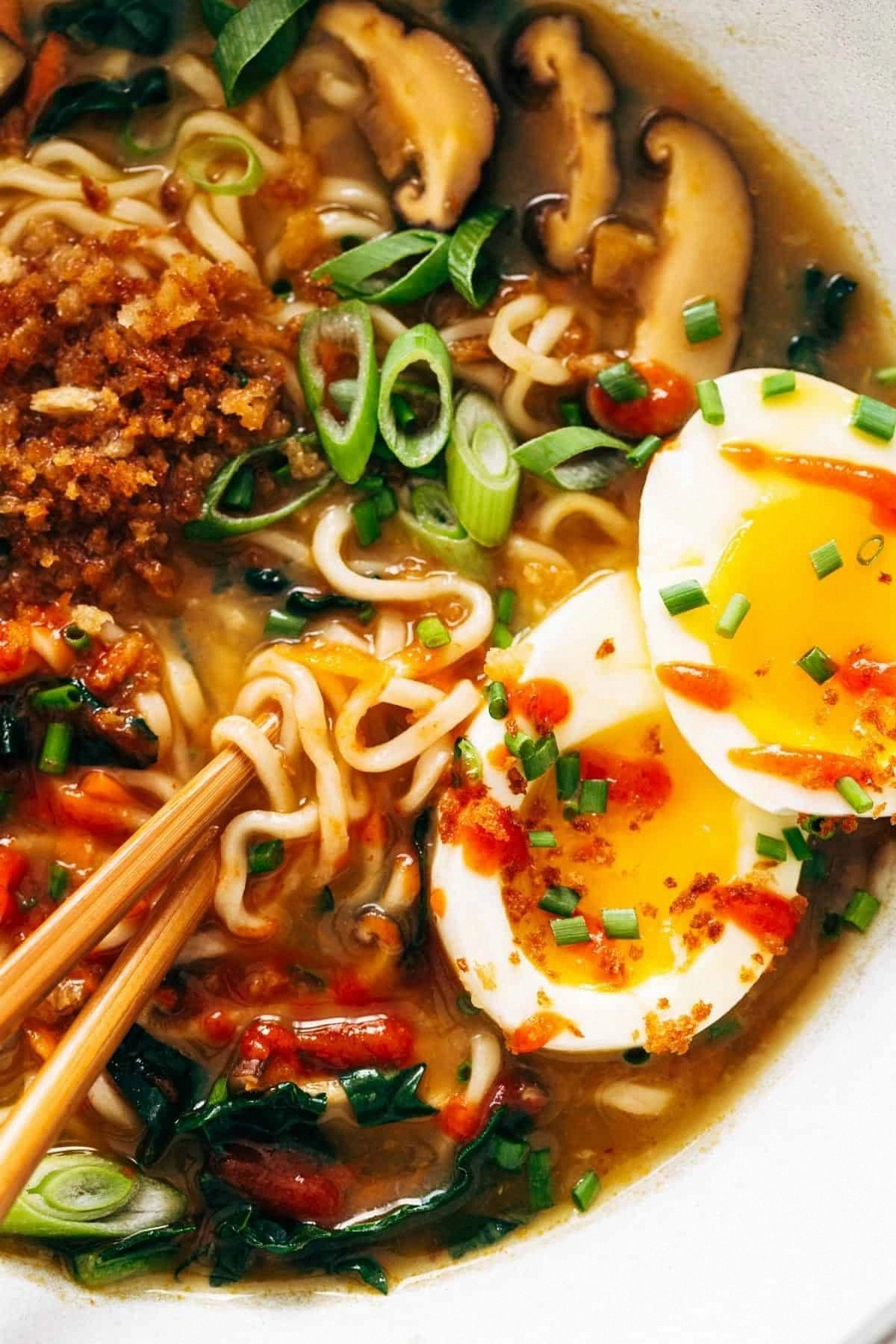
At this stage, assemble the bowls. Divide the drained noodles evenly among four deep bowls. Ladle the hot broth, mushrooms, carrots, and kale over the noodles, ensuring each bowl gets a generous amount of liquid. The broth should coat the noodles like a silky blanket, and the steam rising should be enough to fog the kitchen windows.
-
Finish each bowl with a drizzle of chili oil, a handful of toasted panko, and the marinated egg halves. Sprinkle a pinch of toasted sesame seeds if you like an extra nutty note. Give the bowl a quick swirl, and you’ll hear the subtle clink of the spoon against the porcelain — that’s the sound of satisfaction. Serve immediately while the broth is still bubbling; the contrast of hot broth and cool egg yolk is pure culinary poetry.
-
That’s it — you did it. But hold on, I've got a few more tricks that'll take this to another level. Stay with me here — this is worth it. The next section reveals secret tweaks that will make your ramen unforgettable, even for the most discerning noodle lovers.
Insider Tricks for Flawless Results
The Temperature Rule Nobody Follows
Never add noodles to a rolling boil; instead, keep the broth at a gentle simmer. A high‑heat shock can cause the noodles to release excess starch, turning the broth cloudy and gummy. By maintaining a low simmer, the noodles absorb the broth slowly, resulting in a clear, glossy soup. A friend once tried the high‑heat method and ended up with a soupy mess that resembled porridge — let’s just say it didn’t end well.
Why Your Nose Knows Best
Your sense of smell is the ultimate doneness gauge. When the garlic and ginger hit that perfect aromatic threshold, you’ll notice a sweet, caramelized scent that signals it’s time to add the broth. If you’re uncertain, pause and inhale deeply; the kitchen should smell like a cozy street market, not burnt butter. Trusting your nose saves you from over‑cooking the aromatics, which can introduce bitterness.
The 5‑Minute Rest That Changes Everything
After the broth has simmered and before you add the noodles, let it rest uncovered for five minutes. This short pause allows the flavors to settle and the surface tension to smooth out, creating a silkier mouthfeel. Skipping this rest step can leave the broth tasting “raw” or overly sharp, especially if you used a high‑sodium soy sauce. The rest period is a tiny investment for a massive payoff in flavor harmony.
Panko Power Play
To achieve the perfect crunch, toast panko in a dry skillet over medium heat until it turns golden brown and releases a nutty aroma. For an extra layer of flavor, splash a teaspoon of sesame oil into the pan just before the panko finishes toasting. This trick adds a subtle richness that elevates the texture without making the topping greasy.
Egg‑Yolk Gold
Soft‑boiled eggs are the crown jewels of ramen. For a perfectly runny yolk, set a timer for exactly six minutes, then shock the eggs in ice water for at least two minutes. The resulting yolk should be a golden river that flows into the broth, adding silkiness and a mellow, buttery flavor. If you over‑cook, the yolk turns chalky and loses its magical effect.
Creative Twists and Variations
This recipe is a playground. Here are some of my favorite ways to switch things up:
Spicy Miso Madness
Swap half of the soy sauce for red miso paste and add a spoonful of gochujang. The result is a deep, fermented heat that layers beautifully with the mushroom broth. Ideal for those who love a bold, umami‑rich kick.
Coconut Curry Ramen
Replace the chicken broth with coconut milk and add a tablespoon of Thai red curry paste. The broth becomes creamy, fragrant, and slightly sweet, turning the bowl into a tropical escape. Garnish with fresh cilantro and lime wedges for brightness.
Veggie‑Only Victory
Use vegetable broth, double the amount of kale, and add sliced shiitake, baby corn, and snap peas. Top with toasted sesame seeds and a drizzle of toasted peanut oil for a nutty finish. This version satisfies vegans while keeping the umami intensity high.
Seafood Sensation
Add a handful of peeled shrimp and a few strips of nori to the broth in the final minute of simmering. The shrimp cooks quickly, imparting a subtle briny flavor that pairs wonderfully with the mushroom base. Finish with a splash of yuzu juice for a citrusy pop.
Cheesy Ramen Fusion
Stir in a quarter cup of shredded mozzarella or a slice of American cheese just before serving. The cheese melts into the broth, creating a velvety texture reminiscent of a comfort‑food casserole. This twist is perfect for picky eaters who crave cheese.
Storing and Bringing It Back to Life
Fridge Storage
Separate the broth, noodles, and toppings into airtight containers. The broth stays fresh for up to three days, while cooked noodles are best used within 24 hours to maintain their bite. When reheating, gently warm the broth on low heat and add a splash of water to revive the noodle texture.
Freezer Friendly
Freeze the broth in portion‑size zip‑top bags for up to two months. Noodles don’t freeze well, so keep them out of the freezer; instead, cook fresh noodles when you’re ready to serve. To reheat, thaw the broth overnight in the fridge, then bring it to a simmer before adding freshly cooked noodles.
Best Reheating Method
Place the broth in a saucepan, add a tablespoon of water, and heat over medium‑low until just bubbling. This steam‑infused reheating restores the broth’s silkiness without over‑cooking the noodles. Add the toppings at the last minute to keep their textures intact, and you’ll have a bowl that tastes as fresh as the original.