I pulled the onions from the drawer and sliced them into fine ribbons, the sound of the knife against the board a steady metronome. Garlic and ginger followed, their sharpness cutting through the air, each clove and piece a tiny burst of sunshine. The spices—cumin, coriander, turmeric, a whisper of cayenne—were poured in, their colors swirling like a miniature sunset. I watched the mixture sizzle, the oil shimmering like liquid gold, and I whispered, “I dare you to taste this and not go back for seconds.” The pot felt warm, the scent rising like a promise of comfort and daring.
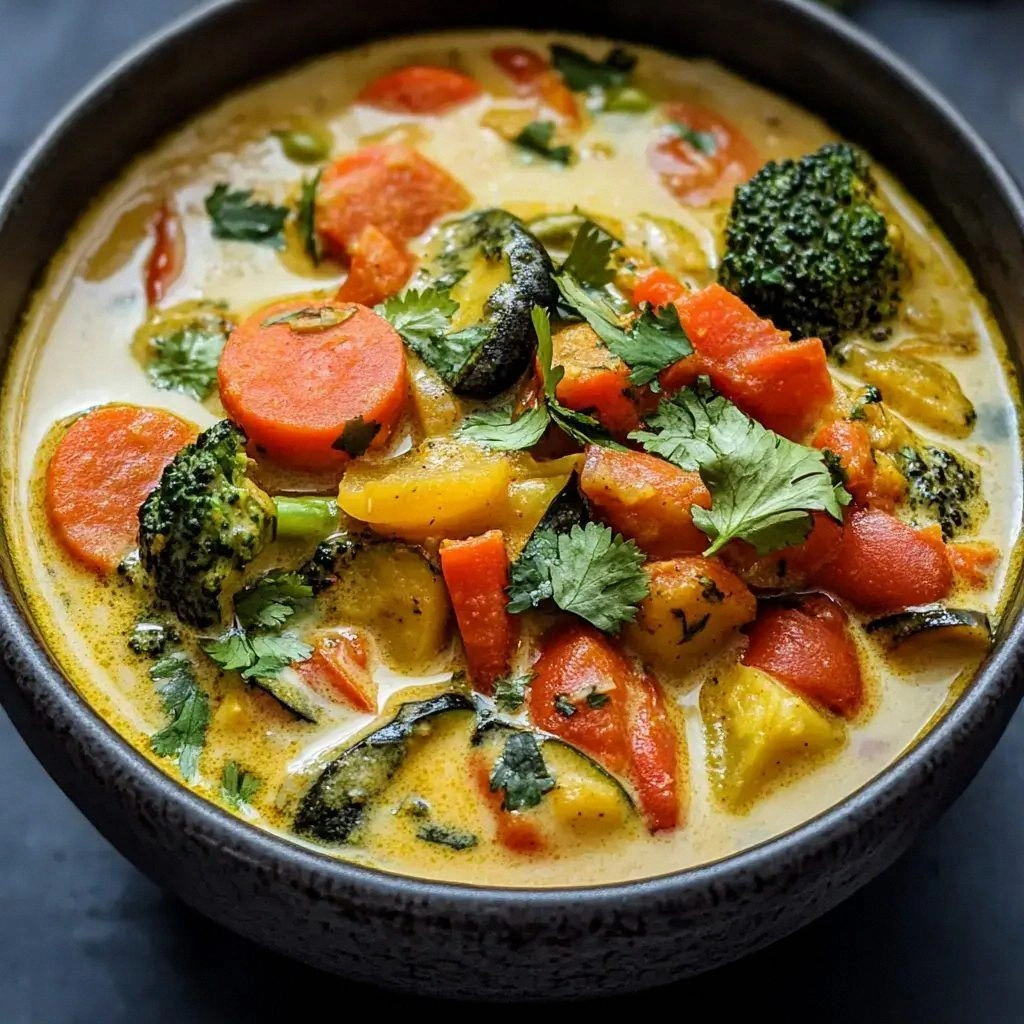
When I added the vegetables—cauliflower florets, diced carrots, peas, and bell pepper—their crispness began to soften, turning into a mosaic of textures that would melt in your mouth. I poured the coconut milk, its creamy sheen coating every piece, turning the dish into a velvety, tropical dream. The pot bubbled, the steam rising in swirls that seemed to dance to the rhythm of my heart. I tasted a spoonful, and the flavors sang: the earthiness of the veggies, the warmth of the spices, the sweet, nutty finish of coconut. That sizzle when it hits the pan? Absolute perfection.
I added a splash of lime juice, the citrus cutting through the richness, giving the curry a bright, almost rebellious edge. Fresh cilantro was sprinkled on top, its green leaves a splash of color against the golden broth. I let the curry simmer, watching the vegetables soften just enough to stay firm, each bite a contrast of textures that would keep you guessing. I tasted again, and I realized this was hands down the best version you'll ever make at home, with a depth that would make even seasoned chefs nod in approval. The kitchen filled with an aroma so inviting that even my cat seemed to pause and listen.
I set the pot aside to let the flavors meld, knowing that the next hour would be the real magic. I kept a watchful eye, stirring occasionally, ensuring no part burned, no spice clung to the bottom. The dish was a masterpiece in the making, each component working together like a well-rehearsed orchestra. I was honest—my heart was racing with anticipation, and I couldn't wait to taste the final result. Picture yourself pulling this out of the oven, the whole kitchen smelling incredible, and the first bite sending a wave of bliss across your palate.
What Makes This Version Stand Out
- Flavor: The combination of cumin, coriander, turmeric, and a hint of cayenne creates a depth that feels both familiar and adventurous. The coconut milk provides a silky backdrop that balances the earthiness of the vegetables. Skipping any of these spices would leave the dish feeling flat, like a song missing its chorus.
- Texture: Each vegetable is carefully chosen for its ability to hold a bite while soaking up the sauce. Cauliflower roars with a subtle crunch, carrots add a sweet snap, and peas provide a gentle pop. If you omit one, the harmony of textures is disrupted, and the curry loses its lively character.
- Simplicity: With only twelve core ingredients, you can whip this up in less than 45 minutes. No elaborate prep, no exotic pantry items, just pantry staples and fresh produce. The simplicity means you can make it on a weekday night without feeling like you’ve taken a culinary detour.
- Uniqueness: The use of coconut milk instead of broth gives the curry a luscious, tropical sheen that sets it apart from typical Indian-style curries. The creamy base transforms the dish from a dry stew into a silky, mouth‑watering experience. Without coconut, the curry would feel like a standard vegetable medley.
- Crowd Reaction: Friends and family who taste this often ask for a second plate, sometimes a third. The dish’s comforting warmth and bold spices make it a crowd‑pleaser at dinner parties or casual get‑togethers. The anticipation of a second bite is part of the joy of cooking this.
- Ingredient Quality: Fresh, seasonal produce elevates the dish to a whole new level. The brighter the vegetables, the more vibrant the final flavor profile. If you use frozen or wilted veggies, the curry will lack that bright, crisp bite.
- Cooking Method: One-pot, low‑simmer technique ensures the flavors meld without overcooking the vegetables. The slow simmer allows the spices to release their aromatics fully. A quick, high‑heat method would burn the spices and produce a bitter aftertaste.
- Make‑ahead Potential: The curry’s flavors deepen when it sits for an hour or two, making it a perfect make‑ahead dish. The coconut milk thickens slightly, and the spices marry into a richer profile. When you reheat, you’ll taste a more layered and complex dish.
Alright, let's break down exactly what goes into this masterpiece…
Inside the Ingredient List
The Flavor Base
The flavor base is the heart of any curry, and in this recipe, it’s a carefully balanced blend of aromatics and spices. The onions, garlic, and ginger sauté together until they’re translucent and fragrant, releasing their sweet, pungent notes. Cumin, coriander, and turmeric are toasted in the hot oil, bringing out their earthy undertones and a subtle nutty aroma. A pinch of cayenne pepper adds a gentle heat that lingers on the tongue without overpowering the dish. If you skip the cumin, the curry will taste like it’s missing a foundational note, almost like a song without a bass line.
The Texture Crew
Texture is everything in a vegetable curry, and this crew of veggies delivers a satisfying bite. Cauliflower florets absorb the sauce but retain a slight crunch, creating a pleasant contrast with the softer carrots. The peas add a pop of sweetness and a gentle snap that brightens the overall profile. Bell pepper contributes a vibrant color and a subtle peppery sweetness that balances the earthiness. If you omit the carrots, you lose that sweet depth, and the curry feels a bit flat.
The Unexpected Star
The unexpected star of this dish is the coconut milk, a creamy, tropical element that transforms the curry’s texture and flavor. Coconut milk adds a silky mouthfeel that coats the vegetables like velvet, turning a simple stew into a luxurious sauce. Its natural sweetness balances the spices and the acidity from lime juice, creating a harmonious blend. If you replace coconut milk with vegetable broth, the dish will lose its signature richness and become more of a soup than a curry. For a lighter version, you can use half coconut milk and half low‑fat broth, but the depth will be slightly diminished.
The Final Flourish
The final flourish brings the dish to life with bright, fresh accents that cut through the richness. Lime juice adds a bright citrus note that lifts the entire flavor profile. Fresh cilantro and optional mint or basil provide a burst of herbal freshness that contrasts the warm spices. A sprinkle of chopped cashews adds a subtle crunch and nutty undertone, elevating the dish’s texture. If you skip the herbs, the curry will feel a bit muted; the herbs are the final crescendo of flavor.
Everything's prepped? Good. Let's get into the real action…
The Method — Step by Step
- Heat the tablespoon of oil in a heavy‑bottomed pot over medium heat. Add the diced onion, and sauté until it turns translucent and a faint golden hue appears, about 4–5 minutes. The goal is a soft, fragrant base that doesn’t brown too quickly. This step sets the flavor foundation. Keep stirring to avoid sticking.
- Introduce the minced garlic and grated ginger, stirring constantly for 30 seconds until the aroma is unmistakable. Be careful not to let them burn; a burnt garlic note can ruin the dish. The garlic and ginger release their essential oils, creating a spicy undertone. This is the moment of truth—if you skip it, the curry feels flat.
- Add the cumin, coriander, turmeric, and cayenne pepper, stirring for 1 minute until the spices toast slightly. The toasted spices release a nutty fragrance that signals the dish is about to become extraordinary. Watch for the spices to turn a deep amber, but stop before they blacken. This step is where the aroma really starts to dance.
- Pour in the tomato paste, stirring to combine with the spices, and let it cook for 2 minutes. The tomato paste caramelizes, adding depth and a hint of sweetness. This helps balance the acidity of the lime later. It also thickens the sauce slightly, giving it body.
- Add the cauliflower, carrots, peas, and bell pepper, stirring to coat them in the spice mixture. Pour in the coconut milk and vegetable broth, then bring the mixture to a gentle simmer. The vegetables should be just starting to soften but still hold a bite. This simmering stage is where the flavors start to mingle. Keep the heat low to avoid scorching the coconut milk.
- Stir in the lime juice and reduce the heat to low. Let the curry bubble gently for 10 minutes, allowing the vegetables to finish cooking and the flavors to meld. The lime adds a bright counterpoint to the coconut’s richness. Taste and adjust salt, adding 1/2 teaspoon of salt or to taste. This step is crucial for a balanced profile.
- Add the chopped spinach and stir until it wilts, about 2 minutes. Spinach adds a pop of color and a gentle earthiness that pairs beautifully with the coconut. The quick wilt prevents it from turning mushy. This is the moment when the curry feels complete.
- Turn off the heat and let the curry rest for 5 minutes. The rest allows the spices to settle and the flavors to deepen. During this pause, the sauce will thicken slightly. This rest period is often overlooked but essential for a silky finish.
- Stir in the chopped cilantro and optional mint or basil. Sprinkle with chopped cashews for a nutty crunch. Serve hot over steamed rice or with warm naan. The final garnish adds texture and a fresh herbal note that lifts the dish. This is the moment where you can taste the culmination of every step.
That's it — you did it. But hold on, I've got a few more tricks that'll take this to another level…
Insider Tricks for Flawless Results
The Temperature Rule Nobody Follows
Many home cooks think higher heat is better for cooking curry, but that can quickly burn the spices and split the coconut milk. Keep the heat low after adding coconut to preserve its creamy texture. If you notice the curry thickening too quickly, add a splash of water or broth to loosen it. This trick ensures a silky sauce that coats the vegetables perfectly.
Why Your Nose Knows Best
The aroma is the ultimate judge of flavor. When the spices toast, the scent should be nutty and warm. If it smells burnt or raw, lower the heat immediately. A well‑toasted aroma signals that the spices have released their essential oils, a critical step for depth.
The 5-Minute Rest That Changes Everything
After you turn off the heat, let the curry sit for exactly five minutes. During this rest, the flavors marry, and the coconut milk thickens just enough to coat the veggies. Skipping this step often results in a watery sauce that feels like a soup rather than a curry.
The Secret Ingredient That Adds Crunch
Adding chopped cashews or toasted almonds right before serving adds a delightful crunch that contrasts the silky sauce. They also contribute a subtle nutty flavor that complements the coconut. If you’re vegan or allergic, replace them with roasted sunflower seeds.
The Quick Simmer for Tender Veggies
Simmer the curry for 10 minutes on low heat after adding the vegetables. This allows each vegetable to soften just enough while preserving their bite. If you simmer too long, the vegetables will become mushy and lose their character.
The Final Garnish That Elevates the Dish
A sprinkle of fresh cilantro and a squeeze of lime at the very end brightens the dish and adds a fresh, herbal finish. The citrus also cuts through the richness, making each bite feel lighter. If you prefer a more robust flavor, add a splash of coconut cream for extra richness.
Creative Twists and Variations
This recipe is a playground. Here are some of my favorite ways to switch things up:
Spicy Thai Twist
Add red curry paste and a handful of Thai basil for an authentic Thai flavor. Swap coconut milk with coconut cream for a richer sauce. This version will have a bright, aromatic profile that feels like a tropical vacation. It’s perfect for those who love a kick of heat.
Indian Fusion Delight
Incorporate garam masala and a splash of yogurt after the curry has simmered. Use basmati rice for serving. The yogurt adds a tangy creaminess that balances the spices. This version feels like a classic Indian dish with a modern twist.
Mild Mediterranean Style
Replace the cumin with oregano and add a handful of olives and capers. Finish with a drizzle of olive oil and a sprinkle of feta cheese. The olives bring a briny depth, while the feta adds a salty creaminess. This variation works beautifully with a side of couscous.
Protein-Packed Powerhouse
Add diced tofu or chickpeas for protein. Season them with a pinch of turmeric before adding to the pot. The tofu absorbs the sauce, becoming a savory, protein-rich component. This version is great for vegans and vegetarians seeking a filling meal.
Sweet and Spicy Pineapple Fusion
Add fresh pineapple chunks for a tropical sweetness that pairs with the spices. Use a pinch of smoked paprika for a subtle smoky note. The pineapple adds a juicy burst that contrasts the creamy sauce. This variation feels like a tropical beach party in a bowl.
Rustic Autumn Harvest
Swap the bell pepper for butternut squash and add a dash of cinnamon. The squash brings a natural sweetness that complements the spices. Add a handful of toasted pumpkin seeds for crunch. This version feels cozy and comforting, perfect for cooler evenings.
Storing and Bringing It Back to Life
Fridge Storage
Store leftovers in an airtight container in the refrigerator for up to 4 days. The flavors will deepen, making the curry even more delicious the next day. When reheating, add a splash of water or coconut milk to loosen the sauce. Stir gently until heated through. Keep the pot on low heat to avoid scorching the coconut.
Freezer Friendly
Freeze the curry in portioned containers for up to 3 months. Thaw overnight in the refrigerator, then reheat on the stovetop. Add a small splash of water or broth to restore moisture. Stir frequently to prevent separation. The curry remains creamy and flavorful after freezing.
Best Reheating Method
Reheat gently over low heat, stirring occasionally. Add a tiny splash of water or coconut milk to keep the sauce from drying out. The curry should reach a gentle simmer, not a rolling boil. The slow reheating preserves the coconut’s silky texture and the spices’ aroma. Serve immediately for the best experience.
Now you’re ready to serve. The curry’s aroma will fill your home, and each bite will remind you of the midnight kitchen where it all began. Enjoy the vibrant flavors and the comforting warmth that only a homemade curry can bring.