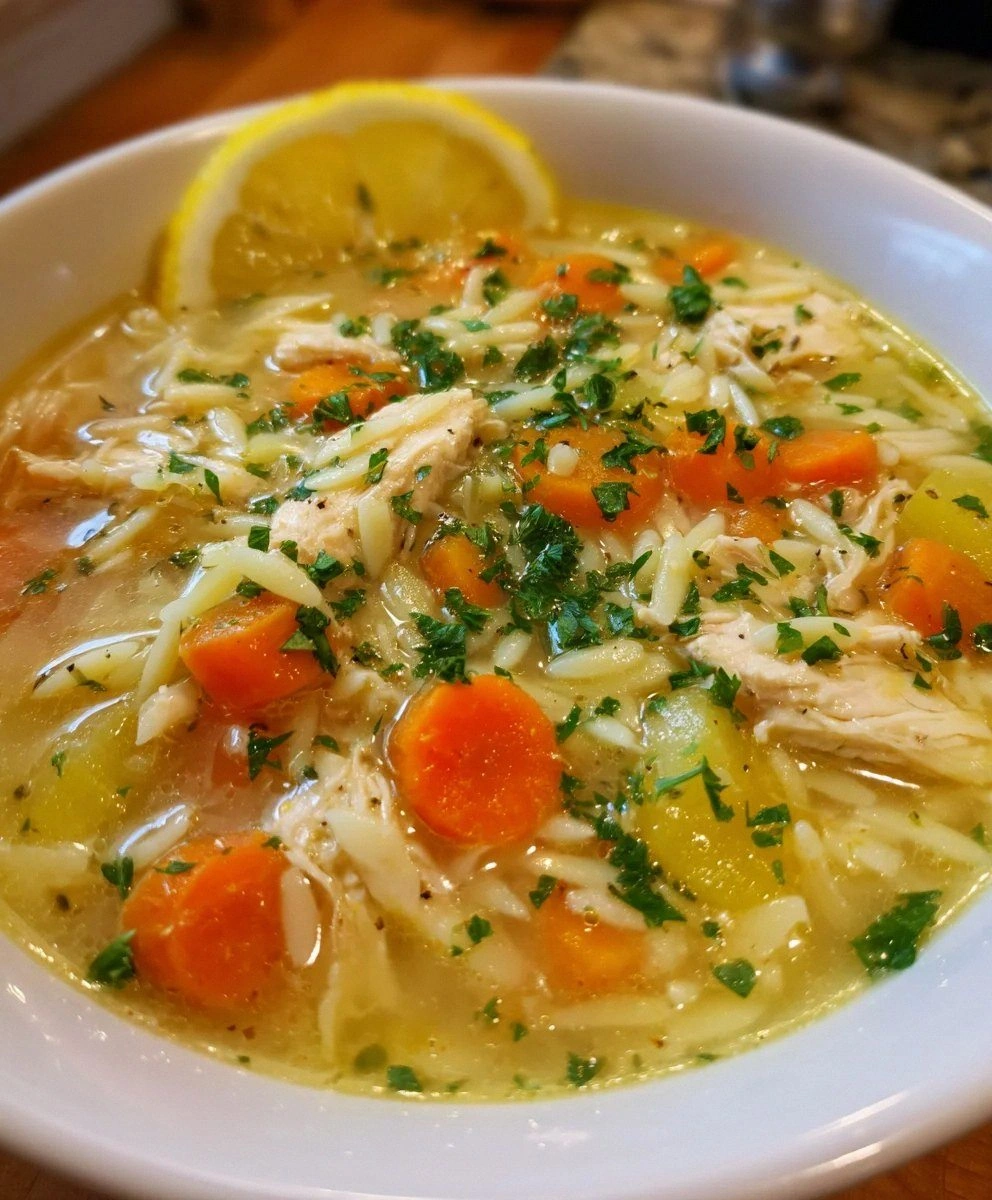
I still remember the first time I made Lemon Chicken Orzo Soup. It was one of those miserable February evenings when the sky looked like an old dishcloth and my apartment felt like a walk-in freezer. I had planned on making something hearty—maybe a beef stew—but realized halfway through that I had no beef, no potatoes, and exactly one sad chicken breast lurking in the back of the fridge. What I did have was a bag of orzo, a couple of lemons, and a serious case of the winter blues. Thirty minutes later, I was standing over the stove with a spoon in one hand and a dishtowel in the other, blinking back tears because somehow this accidental soup tasted like liquid sunshine. That first spoonful was bright, comforting, and so ridiculously fragrant that my neighbor actually knocked to ask what I was cooking. I ended up eating three bowls standing up, still wearing my coat because I couldn’t bear to stop long enough to take it off.
Since that night, I’ve tweaked, tested, and obsessed over this recipe more times than I care to admit. I’ve made it when friends showed up with sniffles, when family needed a hug in a bowl, and when I simply wanted my kitchen to smell like optimism. Each time, the reaction is the same: eyes go wide, shoulders drop, and someone inevitably asks, “Wait, why does this taste so much better than any chicken soup I’ve ever had?” The answer is a mix of tiny but crucial choices—how you brown the chicken, when you add the lemon, how you treat the orzo so it stays plump instead of gummy. Most recipes rush these steps and end up with flat flavor and mushy pasta. We’re not doing that.
If you’ve ever struggled to get chicken soup that tastes like more than salty water, or if you’ve battled orzo that swells into a starchy blob, you’re not alone—and I’ve got the fix. This version layers flavor like a cozy blanket: first we build a quick aromatic base, then we coax every drop of savoriness out of the chicken, and finally we finish with a bright lemon hit that makes the whole bowl sing. Picture yourself pulling this off the stove, steam curling up, the citrus cutting through the savory broth like a spotlight. Your kitchen will smell like a Mediterranean grandma’s house on Sunday, and your taste buds will throw a parade. Let me walk you through every single step—by the end, you’ll wonder how you ever made it any other way.
What Makes This Version Stand Out
- Velvet Broth: Instead of watery stock, we reduce white wine and chicken drippings into a silky, full-bodied broth that coats each piece of orzo like liquid gold.
- Two-Stage Lemon: Zest goes in early for floral depth, juice goes in off-heat so it stays bright—not bitter. Most recipes dump it all in at once and end up with muddled, harsh soup.
- Golden Chicken Bits: We sear the chicken until the edges caramelize, then deglaze those browned bits into the soup. That fond is free flavor, and skipping it is culinary crime.
- Orzo Insurance: Pasta is cooked separately and added at the end, so leftovers stay slurp-able instead of turning into a bloated sponge overnight.
- Weeknight-Friendly: From fridge to bowl in 45 minutes, one pot for the soup, one small pot for the orzo. Cleanup is a breeze, which means you can actually enjoy that second helping.
- Make-Ahead Magic: Flavor improves overnight, and the lemon stays vibrant because we add it fresh. Reheat gently and you’d swear it was just made.
- Crowd Reaction: I’ve served this to picky kids, spice-phobic grandparents, and self-proclaimed soup snobs. They all go quiet after the first spoonful—that’s when you know it’s a keeper.
Alright, let’s break down exactly what goes into this masterpiece.
Inside the Ingredient List
The Flavor Base
Every great soup starts with a quiet symphony of aromatics, and this one is no exception. Yellow onion gives a gentle sweetness that plays against the lemon’s tang; aim for a medium dice so they melt into the broth but still offer tiny bites. Carrots bring earthy sugar and that classic orange fleck that screams comfort. Celery adds a faint bitterness that keeps the soup from tipping into candy-sweet territory. Garlic goes in later so it stays pungent rather than turning acrid. And here’s the kicker—a fennel bulb, sliced whisper-thin. It wilts down and gives a subtle licorice note that makes people ask, “What’s that mysterious flavor I can’t name?” Skip it and the soup still works, but you’ll lose the intrigue.
The Texture Crew
Chicken thighs are non-negotiable for me. Yes, breast is leaner, but thighs stay juicy even if you accidentally over-sear while Instagramming the process. Cut them into generous chunks; they shrink and toughen if too small. Orzo is the adorable rice-shaped pasta that kids and adults alike love. We’ll cook it in well-salted water until just al dente, then toss with olive oil so the grains stay separate while they wait for their soup bath. Baby spinach wilts in seconds and adds a pop of color plus a sneaky health halo. If you hate spinach, swap in kale ribbons—just massage them first so they don’t feel like chewing on a Christmas wreath.
The Unexpected Star
Lemon takes center stage, but only if you treat it right. Organic lemons are worth the splurge here because you’re using the zest, and pesticide peel is not the seasoning we want. Zest first, juice second—zest perfumes the oil when it hits warm vegetables, creating a lemon aura that juice alone can’t achieve. For the juice, strain out seeds but keep the pulp; those tiny sacs burst on your tongue like caviar made of sunshine. White wine adds acidity and fruit notes that amplify the lemon without shouting.
The Final Flourish
Fresh dill is my secret handshake. Stirred in at the end, it gives a grassy, anise lift that makes the soup taste like spring even if there’s snow on the ground. Parsley works in a pinch, but dill is the childhood-memory trigger. Extra-virgin olive oil for drizzling should be the good stuff—green, peppery, the kind that makes you cough a little when you sip it straight. And please, promise me you’ll buy a block of Parmigiano-Reggiano and grate it yourself. The pre-ground sawdust in the green can will sink and sulk; real cheese melts into delicate threads that add umami depth.
Everything’s prepped? Good. Let’s get into the real action.
The Method — Step by Step
- Start by patting the chicken thighs very dry with paper towels—moisture is the enemy of browning. Heat a heavy pot or Dutch oven over medium-high heat for a full two minutes; hover your palm over the surface and when it feels like a hot summer sidewalk, lay the chicken down without crowding. It should sizzle like applause. Walk away for three minutes; no poking, no flipping. When the edges turn golden and release easily, flip and cook another two minutes. Transfer to a plate; the centers will still be pink, but they’ll finish later in the broth. Those brown bits stuck to the pot? Liquid gold—leave them right there.
- Lower heat to medium and add a thin film of olive oil. Toss in the diced onion, carrot, celery, and fennel with a big pinch of salt. Stir to coat, scraping the bottom so the vegetables deglaze the fond. The aroma will hit you first—sweet, grassy, faintly anise. Cook for five minutes until the edges start to color and the volume shrinks by half. If anything threatens to burn, splash in a tablespoon of water; think of it as CPR for your pan.
- Clear a small circle in the center and add the minced garlic and lemon zest. Let them toast for thirty seconds; you’ll see the garlic go from raw to fragrant and the oils in the zest will glisten. Stir everything together and inhale—it should smell like you’re walking through a citrus grove at dawn. Don’t let the garlic brown or it’ll turn bitter and ruin the whole pot. This is the moment of truth for your flavor base.
- Pour in the white wine; it will hiss and steam dramatically. Use a wooden spoon to coax up every last brown bit, scraping until the bottom of the pot looks clean. Let the wine bubble for two minutes so the alcohol cooks off and you’re left with concentrated fruit and acidity. The liquid will reduce to a glossy syrup that clings to the vegetables like a light sauce. If you taste a carrot at this stage, it should be bright, tangy, and impossible to stop eating.
- Add the chicken broth, bay leaf, and half the dill stems (save the fronds for later). Return the chicken and any resting juices to the pot. Bring to a gentle simmer, not a rolling boil—think lazy ocean waves. Cover partially and let it burble for fifteen minutes; the broth will turn a light amber and the vegetables will go silky. Your kitchen should smell like a bistro on a Greek island by now.
- While the soup simmers, cook the orzo in a separate saucepan of well-salted water. You want it a minute shy of package directions; it will soften further when it meets the hot soup. Drain, rinse under cold water to stop the cooking, and toss with a teaspoon of olive oil so the grains stay separate like well-behaved caviar. This is orzo insurance against gumminess.
- Fish out the bay leaf and dill stems. Stir in the baby spinach and watch it wilt into deep green ribbons in seconds. Squeeze in the lemon juice, add the reserved dill fronds, and taste for salt. The broth should be bright, savory, and lip-smacking. If it feels flat, add another pinch of salt or a splash more lemon; acid and salt are the volume knobs of flavor.
- To serve, place a scoop of orzo in each bowl, ladle the hot soup over the top, and finish with a swirl of olive oil and a shower of fresh dill. Pass a micro-plane of Parmigiano-Reggiano at the table so everyone can cloud their broth with salty threads. The contrast of hot soup and cool cheese melting on contact is pure magic. Now watch your guests go quiet—that’s the sound of success.
That's it—you did it. But hold on, I’ve got a few more tricks that’ll take this to another level.
Insider Tricks for Flawless Results
The Temperature Rule Nobody Follows
Most home cooks crank the heat to hurry things along, but gentle simmering is what coaxes collagen and flavor out of chicken and vegetables. Keep the liquid just below a boil; you should see tiny bubbles breaking the surface like champagne on a lazy day. If it boils hard, the chicken tightens, the vegetables go mushy, and your broth turns cloudy. Patience equals clarity, both in life and in soup.
Why Your Nose Knows Best
Trust your sense of smell as a built-in timer. When the garlic and lemon zest hit the pan, count thirty seconds after you can first smell them—this is usually when they’re perfectly toasted. If you wait until they smell strong, they’re already past the point of no return. Your olfactory system is faster than any kitchen timer, and it’s calibrated to your preferences. A friend tried skipping this mindfulness once and produced soup that tasted like burnt popcorn; we still call it “Eau de Movie Theater.”
The 5-Minute Rest That Changes Everything
Once the soup is done, let it sit off heat for five minutes before serving. This brief pause lets the fat rise slightly and the flavors meld, so each spoonful tastes harmonious instead of like individual ingredients shouting over each other. Cover the pot with a tilted lid so it stays hot but doesn’t continue cooking. Use this time to set out bowls, call everyone to the table, or sneak a piece of crusty bread. You’ll notice the difference in depth immediately.
Season in Layers, Not Shocks
Salt at three distinct points: when sweating vegetables, after adding broth, and at the very end. Each stage draws out different flavors—first the vegetables’ moisture, then the protein’s savoriness, finally the brightness of the lemon. If you salt only at the end, you’ll need more overall and the soup tastes one-dimensional. Think of it like adjusting the bass, midrange, and treble on a stereo instead of cranking one knob.
The Fridge Chill Test
Before storing leftovers, cool the soup quickly by placing the pot in a sink filled with ice water and stirring for a few minutes. This prevents the orzo from continuing to absorb broth and swell. Once lukewarm, ladle into shallow containers so it chills evenly in the fridge. Your future self will thank you when the pasta is still al dente and the lemon still sings.
Creative Twists and Variations
Mediterranean Red Pepper Remix
Swap the fennel for a diced roasted red pepper and stir in a pinch of smoked paprika. The soup turns sunset-orange and gains a gentle smoky warmth that tastes like coastal Spain. Finish with crumbled feta instead of Parmesan for salty tang. If you close your eyes, you can practically hear waves crashing on a pebble beach.
Creamy Dreamy Version
Stir in a splash of heavy cream at the very end for a velvety chowder vibe. The cream softens the lemon’s edge and turns the broth luxurious. Add a handful of frozen peas for sweetness and color. Kids who claim to hate soup suddenly become polite, vegetable-eating angels.
Spicy Spring Green
Throw in a diced jalapeño with the vegetables and finish with a fistful of arugula instead of spinach. The pepper’s heat plays beautifully with citrus, and the arugula wilts into a peppery green ribbon that feels like salad-meets-soup. Top with toasted pumpkin seeds for crunch and you’ve got a detox-friendly dinner that still packs attitude.
Seafood Celebration
Skip the chicken and add peeled shrimp during the last three minutes of simmering. They turn coral-pink and infuse the broth with briny sweetness. A final sprinkle of chopped parsley and a drizzle of good olive oil make it taste like you’re dining dockside. I dare you to taste this version and not go back for thirds.
Coconut Lemongrass Detour
Replace half the broth with full-fat coconut milk and add a stalk of bruised lemongrass while the soup simmers. Fish sauce, a teaspoon at the end, adds mysterious umami depth. The result is a Thai-French mash-up that feels like vacation in a bowl. Serve with lime wedges and chili flakes for a build-your-own heat level.
Roasted Veg Boost
Roast the carrots and fennel on a sheet pan at 425°F until caramelized before adding them to the soup. The roasted edges deepen the sweetness and add little flecks of flavor bombs throughout. It’s an extra pan to wash, but the smoky depth is worth it for dinner-party impressiveness. Future pacing: imagine spooning this up on a chilly night, the roasted bits giving you cozy campfire vibes.
Storing and Bringing It Back to Life
Fridge Storage
Keep the orzo separate in its own container; otherwise it will drink the broth overnight and turn into a starchy brick. Store the soup base in airtight glass jars or deli containers for up to four days. The lemon flavor stays vibrant, but give it a gentle stir and a quick taste before reheating—sometimes a tiny squeeze of fresh citrus perks everything back up.
Freezer Friendly
This soup base freezes beautifully, but again, skip the orzo. Ladle cooled soup into quart-size freezer bags, press out air, and lay flat to freeze into slim slabs that stack like books. They thaw in minutes under warm water and save precious freezer real estate. Use within three months for best flavor, though I’ve found a forgotten bag at the six-month mark and it still tasted like edible sunshine.
Best Reheating Method
Gentle is the name of the game. Warm the soup slowly over medium-low heat, stirring occasionally, until it just starts to steam. Add a splash of water or broth if it thickened in storage. Cook the orzo fresh, or if you froze pre-cooked pasta, dunk it in boiling water for ten seconds to refresh. Combine in bowls, not the pot, so you can control the pasta-to-soup ratio per serving. A final drizzle of olive oil and a scatter of fresh dill make it taste brand new.