Picture this: it is a grey, drizzly Tuesday, your inbox is overflowing, the cat has knocked your favorite mug off the counter, and the only thing standing between you and total chaos is the memory of a cake you tasted once in a tiny Roman side-street bakery where the nonna behind the counter winked at you as she tucked a still-warm square into a crinkly paper bag. That cake was ethereally moist, studded with melty chocolate, and tasted like someone had wrangled a cheesecake and a pound cake into the same pan and made them get along splendidly. I have spent seven years chasing that flavor, baking my way through ricotta fiascos (grainy, leaden, tragic) and chocolate catastrophes (sinking chips, bitter cocoa, the works). Then, last month, the clouds parted: I cracked the code to the Italian Chocolate Chip Ricotta Cake that would make that Roman nonna proud—and maybe a little jealous.
Here is the truth most internet recipes gloss over: ricotta can be a diva. Treat it wrong and you have baked a brick that tastes like someone sneezed cottage cheese into your dessert. Treat it right and you get a crumb so tender it practically sighs when you slice it, with pockets of molten chocolate that snap softly under your fork and dissolve into creamy cocoa bliss on your tongue. If you have ever struggled with dry edges, wet centers, or chocolate chips that plummet like stones to the bottom, you are not alone—and I have got the fix. This version relies on one wildly under-appreciated trick that keeps the crumb lofty while still luxurious, a technique I swiped from an Italian nonna on Instagram Live who spoke zero English yet conveyed more wisdom through gestures than most culinary textbooks.
Fast-forward through three more test batches (my neighbors adore me, my jeans not so much), and I finally landed on the cake that disappeared from the cooling rack before I could photograph it—twice. I will be honest: I ate half the first batch standing up in my kitchen at midnight, fork in hand, refrigerator door ajar, swearing I was only going to have “one more bite.” The combination of mild lemony fragrance from fresh ricotta, bittersweet chocolate, and that whisper of espresso is downright hypnotic. You will pull it from the oven, dust it with a blizzard of powdered sugar, and feel like you have opened a café in your own home minus the overpriced lattes and hipsters on laptops.
Stay with me here—this is worth it. Let me walk you through every single step, from choosing the tub of ricotta that will make or break your cake to the toothpick test that actually works, so by the end you will wonder how you ever made it any other way.
What Makes This Version Stand Out
- Lushness Overload: The ricotta is not just stirred in as an afterthought; it is whipped until clouds form, creating a batter that bakes into a slice that feels like velvet on your tongue, yet still has the structural integrity for a dignified plated dessert (or a sneaky midnight fridge raid).
- Chip Suspension System: Most recipes watch their chocolate sink miserably. We toss the chips in a whisper of flour seasoned with espresso powder; the coating creates micro-anchors so every bite has equal chocolate real estate—no more bottom-heavy regrets.
- One-Bowl Brilliance:
- Flavor Echo Technique: Instead of random vanilla, we layer flavor like nonnas do—citrus zest hits the batter, espresso powder meets the chips, and a final flick of almond extract whispers “I’m Italian” without clubbing you over the head with amaretto.
- Make-Ahead Magic: The cake’s crumb tightens and intensifies overnight, so bake it on Sunday, wrap it lovingly, and Monday’s office coffee break becomes a moment of dolce vita glory. Nobody has to know you baked it two days ago; nonnas never reveal their timeline.
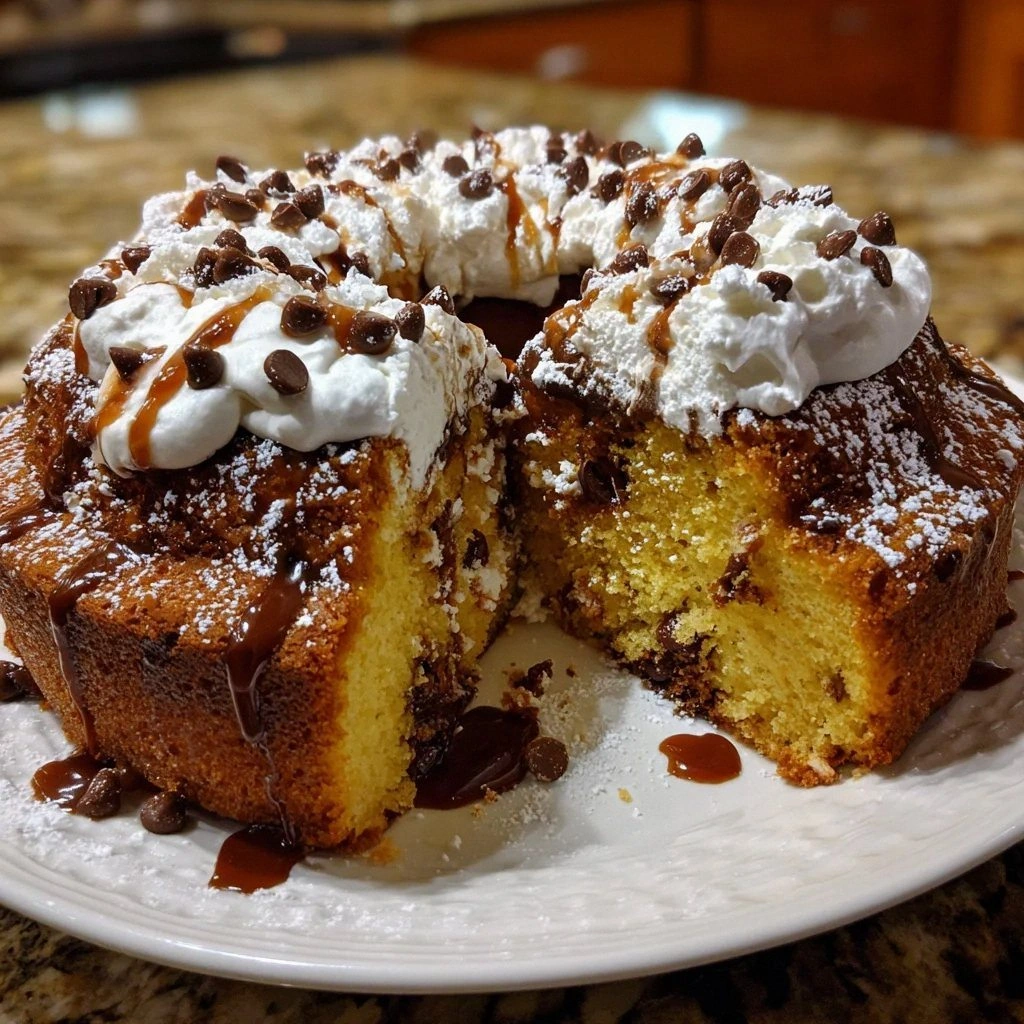
- Crowd Chameleon: Dress it down for kids with a simple snowfall of sugar, or fancy it up for dinner guests with a dark-chocolate ganache drizzle and espresso mascarpone. It shape-shifts to any occasion like a good little black dress—only edible and way more fun.
Alright, let’s break down exactly what goes into this masterpiece, because once you understand why each component earns its place, you will freestyle like a pro in no time.
Inside the Ingredient List
The Flavor Base
All-purpose flour is the reliable best friend who shows up on moving day. It provides the gluten network that traps air and gives us lift, yet plays nicely with the heavy hitters like ricotta. If gluten is a no-go, substitute with a quality 1:1 gluten-free blend, but add an extra tablespoon of liquid to compensate for how thirsty rice flour can be. Baking powder and baking soda work the graveyard shift here, releasing carbon dioxide in two waves so the cake rises early and sets late, preventing the dreaded sinkhole in the middle. Salt is the unsung hero that makes chocolate taste chocolatier and ricotta taste like it spent a summer in Sicily—do not skip it, even if you are the type who claims to be “cutting back.”
The Texture Crew
Unsalted butter must be at true room temperature, meaning you can press a finger into it and leave a shallow cave without the butter sweating or melting. Too cold and it will never incorporate air; too warm and you will grease out your batter into a sad, dense puddle. Granulated sugar does more than sweeten—the edges of each crystal cut through the butter, creating micro pockets that will later expand in the oven for lift, while the sugar’s hygroscopic nature locks in moisture so the cake stays fresh longer than your leftover Halloween candy. Whole-milk ricotta is the Beyoncé of this concert. Buy the freshest you can find, drain it for ten minutes on a paper towel if it looks watery, and never, ever reach for the skim version unless you enjoy eating vaguely cheesy foam board.
The Unexpected Star
Large eggs, again room temperature, act as the emulsifiers that bind water-phobic butter to water-rich ricotta, creating a homogenous batter instead of a curdled mess. Vanilla extract is obvious, but try scraping in the seeds of half a vanilla bean if you want people to close their eyes and sigh audibly. Instant espresso powder is the secret handshake of chocolate desserts; it deepens cocoa notes without announcing “coffee!” to anyone who sniffs the air. If you hate caffeine, use decaf instant granules, but do not omit it—your chocolate will taste flat and shy.
The Final Flourish
Semi-sweet chocolate chips are the crowd-pleasers, though I have been known to chop up a 60% dark bar for irregular puddles of molten chocolate that pool like little lava flows. Whole milk loosens the batter just enough; if you have only 2%, top it off with a splash of heavy cream for richness. And if you want the almond accent, add a measly eighth of a teaspoon—more than that and you will feel like you bit into a bottle of extract. The goal is a whisper, not a shout.
Everything prepped? Good. Let’s get into the real action...
The Method — Step by Step
- Preheat your oven to 350°F (175°C). Position a rack squarely in the center; too low and the bottom over-browns, too high and the crown cracks like a desert floor. Grease a 9-inch springform pan with butter, line the bottom with a circle of parchment, then grease the parchment as well. Dust the whole thing with flour, tapping out the excess so your cake can climb rather than skid.
- In a small bowl, toss the chocolate chips with 1 teaspoon of the flour and the espresso powder until every chip is chalky and coated. This micro-coating swells in the oven, gripping the batter so the chips hover in place like chocolate constellations instead of meteorites crashing south. Set the bowl aside; you will fold these in at the last possible second to prevent streaking.
- In a medium bowl, whisk the remaining flour, baking powder, baking soda, and salt for a full 30 seconds. Yes, set a timer. Even distribution now prevents bitter pockets of leavener later, and the mechanical action fluffs the flour so it will hydrate evenly. Think of it as a tiny gym session for your wrist.
- In the bowl of a stand mixer (or a large bowl and a sturdy spatula if you are feeling retro), beat the softened butter and granulated sugar on medium-high for 3 minutes. The mixture should lighten to the color of a pale café au lait and look like wet sand at the beach—airy, not oily. Do not rush this; trapped air is free leavening, and your forearm could use the cardio.
- Crack in the eggs one at a time, beating each until fully absorbed before adding the next. Drop the speed to low, splash in the vanilla and optional almond extract, then spoon in the ricotta. The batter will look slightly curdled—panic not. Once the flour goes in, the proteins will tighten and smooth out like a good Italian suit.
- Scrape the bowl’s sides with a flexible spatula, then add one-third of the dry ingredients, mixing just until the white streaks vanish. Pour in half the milk, mix briefly, and repeat, ending with the final third of flour. Stop as soon as the batter looks homogenous; over-mixing develops gluten and you will chew your cake like a rubber band.
- Fold in the floured chocolate chips with a spatula, using a figure-eight motion that reaches the bowl’s bottom. The batter should be thick yet spoonable, like Greek yogurt that’s been to finishing school. If it feels stiff, add milk a tablespoon at a time; humidity affects flour, and you are the boss of your batter.
- Spoon the batter into the prepared pan and smooth the top with an offset spatula. Give the pan a gentle jiggle; the surface should ripple like a calm pond. Bake for 40–45 minutes, rotating halfway, until the cake is burnished gold, the edges pull slightly from the sides, and a toothpick inserted two inches from the rim comes out with a few moist crumbs—carry-over cooking finishes the center.
- Cool the cake in the pan on a wire rack for 15 minutes. Run a thin knife around the edge to release any clingy bits, then unclip the springform ring and lift it away. Invert the cake onto your hand, peel off the parchment, and flip it upright onto the rack. Let it cool completely unless you enjoy frosting that melts into a puddle of despair.
That’s it—you did it. But hold on, I’ve got a few more tricks that’ll take this to another level...
Insider Tricks for Flawless Results
The Temperature Rule Nobody Follows
Every ingredient should lounge on the counter for at least 30 minutes before mixing. Cold ricotta will clump, cold eggs will split your emulsion, and cold butter will never trap air. If you are the impatient sort (hi, same), microwave the butter in 5-second bursts, rotating so it softens but does not melt into a sad puddle. Your future self slicing perfect wedges will thank you.
Why Your Nose Knows Best
When the cake is nearly done, your kitchen will smell like buttery hot chocolate with a hint of sweet cream. The moment that aroma intensifies and drifts into the living room, start toothpick-testing. Olfactory cues beat timers every single time because ovens, like people, have moods.
The 5-Minute Rest That Changes Everything
After the cake cools completely, wrap it in plastic and let it sit overnight at room temperature. The crumb hydrates and the flavors meld into a unified chorus rather than a rowdy solo act. Morning coffee plus day-old ricotta cake is a legitimate breakfast in Italy; who are we to argue with centuries of la dolce vita?
Creative Twists and Variations
This recipe is a playground. Here are some of my favorite ways to switch things up:
Citrus Celebration
Swap the almond extract for the zest of one orange plus a squeeze of its juice. Fold in chopped candied peel along with the chips for a cake that tastes like a sunny Sicilian afternoon. Dust with a rosemary-scented powdered sugar by blitzing one teaspoon of dried rosemary with ½ cup sugar in a spice grinder; the herbal note is sophisticated and unexpected.
Berry Ripple
Replace half the chocolate chips with frozen raspberries tossed in flour. The tart berries bleed magenta swirls through the crumb and balance the richness. Serve with a spoonful of lightly sweetened whipped mascarpone and prepare for audible gasps from brunch guests.
Nutty Tuscan
Omit the espresso powder and fold in ½ cup finely chopped toasted hazelnuts plus ¼ cup Nutella, warmed slightly so it ribbons through the batter. The result is a gianduja dream that tastes like spreading Ferrero Rocher on toast, only fancier.
White Chocolate & Cherry
Use white chocolate chips and chopped dried sour cherries soaked in amaretto for 20 minutes. The sweet-creamy fruit combo evokes a gelato flavor profile. Drizzle with a simple glaze of powdered sugar and cherry juice for bakery-case glamour.
Spiced Autumn
Add ½ teaspoon ground cardamom and ¼ teaspoon freshly grated nutmeg to the dry ingredients. Swap the semi-sweet chips for chopped dark chocolate with 70% cocoa. The warm spices make the cake smell like December holidays even if you bake it in July.
Mini Bundts
Divide the batter among greased mini-Bundt molds and bake 18–22 minutes. The increased surface area means more of those crispy-chewy edges Italians fight over. Glaze with espresso-lemon icing for a portable dessert that disappears at potlucks.
Storing and Bringing It Back to Life
Fridge Storage
Wrap the cooled cake in plastic wrap, then slip it into a zip-top bag with the air squeezed out. Refrigerated, it keeps for up to 5 days, though the crumb will firm up. Bring slices back to room temperature for 30 minutes before serving, or warm them 8 seconds in the microwave—any longer and you risk chocolate lava that burns tongues.
Freezer Friendly
Cut the cake into wedges, wrap each in plastic, then foil, and freeze up to 2 months. Thaw overnight on the counter still wrapped; condensation forms on the wrapping, not the cake, so the top stays pristine. Refresh in a 300°F oven for 8 minutes and you will swear it is freshly baked.
Best Reheating Method
Warm slices in a toaster oven at 325°F for 5 minutes. Add a tiny splash of water to the tray; the gentle steam revives the ricotta’s creaminess without drying the crumb. Slather with a quick orange-infused mascarpone (just stir zest, sugar, and cheese) and weekday dessert feels like a trattoria vacation.