Picture this: I was standing in a cramped apartment kitchen, the scent of burnt garlic still lingering in the air, when my friend dared me to turn a simple batch of chicken thighs into something that would make everyone in the house gasp. The moment the sizzling sound hit my ears, I knew I was about to break the rules of comfort food. I grabbed the freshest lemongrass I could find, its bright green stalks smelling like a tropical breeze, and imagined a dish that would feel like a vacation on a plate. This is not just a recipe; it’s a culinary dare that will have you shouting, “I dare you to taste this and not go back for seconds!”
The kitchen lights flickered as I chopped the lemongrass into thin, translucent strips. The aroma hit me like a wave—sharp citrus, a hint of pepper, and that unmistakable herbaceous bite that only lemongrass can deliver. I tossed the pieces into a bowl with minced garlic, a finely sliced shallot, and a splash of fish sauce that added a salty, umami depth. The mixture started to bubble, releasing steam that smelled like a summer barbecue on a humid island. Each ingredient was a note in a symphony, and I could already hear the final crescendo.
Why does this version stand out? Because it strips away the fluff and lets every component shine. The chicken is marinated until the flavors seep into the meat, then grilled to create that coveted smoky char that melts on your tongue. The sauce is a balance of sweet, salty, sour, and spicy, all wrapped around a bright, aromatic base of lemongrass and lime. I’ve tried countless variations, but this one hits every sweet spot. Most recipes get this completely wrong—here’s what actually works. And if you’re skeptical, let me walk you through every single step; by the end, you’ll wonder how you ever made it any other way.
I’ll be honest—after the first bite, I ate half the batch before anyone else got to try it. The texture was a contrast of juicy tenderness and a slight snap from the grill, while the sauce coated the chicken like velvet. The final result? A dish that’s hands down the best version you’ll ever make at home. Picture yourself pulling this out of the oven, the whole kitchen smelling incredible, and seeing the crowd’s delighted faces. That’s the power of a well-balanced, bold, and utterly irresistible flavor profile.
What Makes This Version Stand Out
- Taste: The lemongrass delivers a citrusy brightness that cuts through the richness of the chicken, while the fish sauce adds depth without overpowering.
- Texture: The grill imparts a caramelized crust that crackles with each bite, juxtaposed against the tender, juicy interior.
- Simplicity: Only a handful of ingredients, most of which you likely already have, and a straightforward grilling method.
- Uniqueness: The combination of lemongrass, lime, and hot water creates a sauce that feels both exotic and familiar.
- Crowd Reaction: Friends who’ve tried other Vietnamese-inspired dishes swear this one is the most memorable.
- Ingredient Quality: Fresh lemongrass and high-quality fish sauce are the backbone; the rest can be pantry staples.
- Cooking Method: Grilling, not pan-frying, gives a smoky nuance that elevates the dish.
Alright, let’s break down exactly what goes into this masterpiece. The next section will walk you through the ingredients in detail, so you know why each one matters.
Inside the Ingredient List
The Flavor Base
The heart of this dish is the lemongrass, which provides a citrusy, slightly peppery flavor that’s unmistakably tropical. Fresh lemongrass is essential; dried versions lose much of their bright aroma. If you can’t find fresh, a small amount of lemongrass powder can work, but the texture will differ. Remember, the lemongrass isn’t just for flavor—it also adds a subtle fibrous crunch that contrasts nicely with the tender chicken.
The Texture Crew
Chicken thighs are the star here because they remain moist even when grilled. Boneless, skinless thighs give you easy handling and a consistent bite. If you prefer a leaner cut, use breast meat, but expect a firmer texture and less juiciness. The choice between thighs and breasts will also affect the cooking time—thighs require a few minutes longer to reach safe internal temperatures.
The Unexpected Star
The sauce’s secret weapon is the combination of hot water and lime juice, which creates a tangy, slightly spicy glaze that clings to the meat. This duo lifts the dish from simple to extraordinary, giving it a bright, refreshing finish. The hot water also helps to meld the flavors together, making the sauce silky rather than watery. If you’re a heat lover, add an extra chili; if not, you can skip it without losing the core flavor.
The Final Flourish
A touch of sugar balances the acidity of lime and the saltiness of fish sauce, creating a harmonious sweet-sour profile. The dark soy sauce adds a subtle depth and a hint of color that makes the dish visually appealing. Together, these ingredients form a sauce that coats each piece of chicken like a silky, aromatic blanket.
Everything’s prepped? Good. Let’s get into the real action. The next section will guide you through the method step by step.
The Method — Step by Step
- First, trim the lemongrass stalks, removing the tough outer layers and the fibrous base. Slice the remaining stalks into thin, 1/2-inch strips. This technique ensures maximum flavor extraction during marination. If you’re short on time, use pre‑cut lemongrass from the grocery store.
- In a bowl, combine the sliced lemongrass, minced garlic, finely diced shallot, 2 tablespoons of fish sauce, 1 tablespoon of dark soy sauce, and 1 tablespoon of sugar. Stir until the sugar dissolves and the aromatics release their scent. The mixture should look like a fragrant, glossy paste.
- Add the 1 pound of boneless chicken thighs to the bowl, turning them so they’re fully coated in the lemongrass mixture. Cover the bowl with plastic wrap and let the chicken marinate in the refrigerator for at least 30 minutes, though 2 hours will deepen the flavor. This step is crucial for the chicken to absorb the citrusy, umami notes.
- While the chicken rests, prepare the glaze. In a small saucepan, combine 3 tablespoons of water, 1 clove of minced garlic, 2 tablespoons of lime juice, 2 tablespoons of hot water, 1 tablespoon of sugar, and 1 tablespoon of fish sauce. Bring the mixture to a gentle simmer over medium heat, stirring until the sugar fully dissolves. The glaze should thicken slightly, becoming syrupy.
- Preheat your grill to medium-high heat (around 375°F or 190°C). If you’re using a charcoal grill, let the coals burn down to a consistent heat. Lightly oil the grill grates to prevent sticking, then place the marinated chicken thighs on the grill. This is the moment of truth; the sizzling sound signals that the grill is ready.
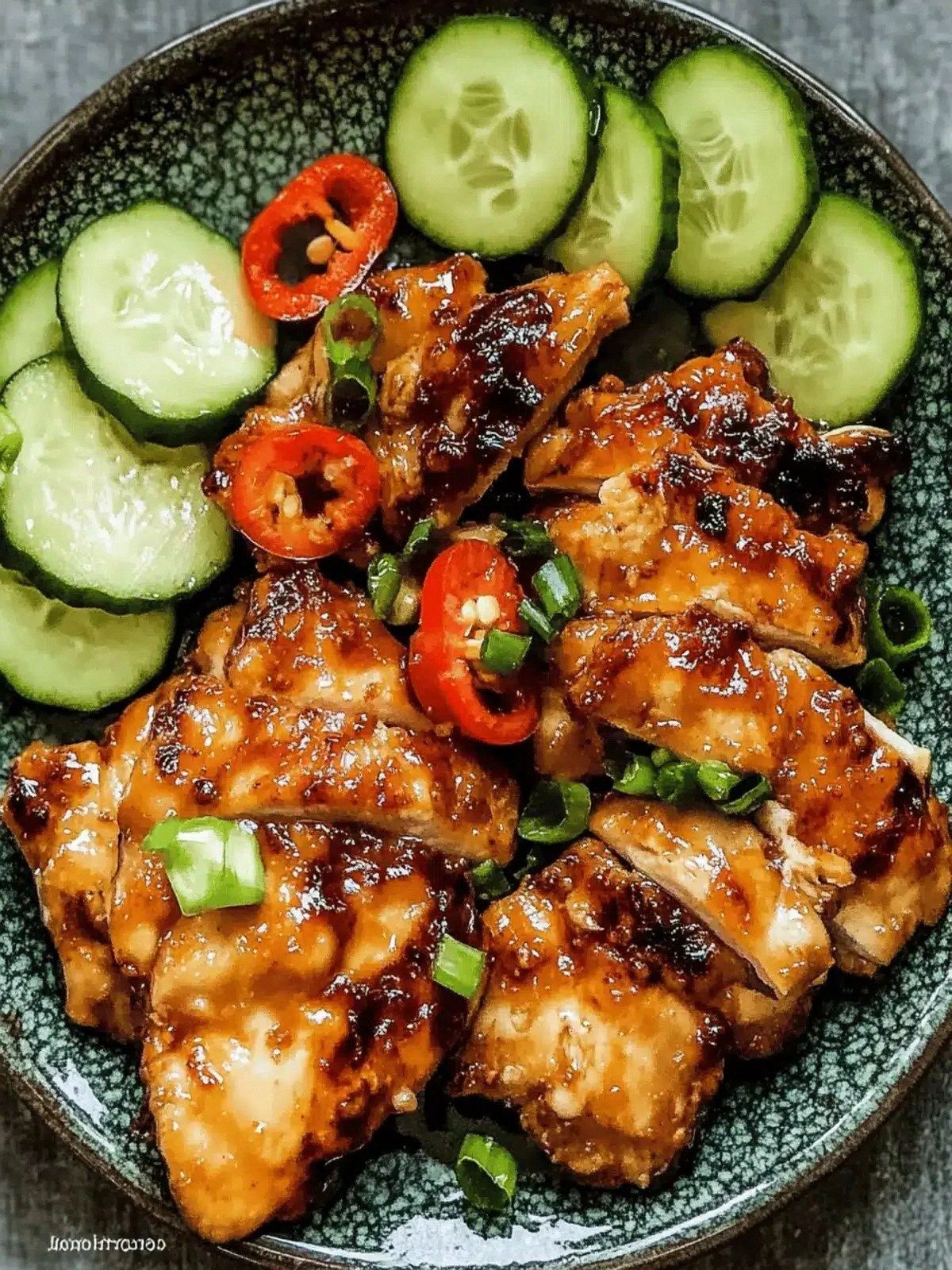
- Grill the chicken for 4-5 minutes on each side, brushing the glaze on each side every 2 minutes. The glaze should caramelize, forming a glossy, slightly charred coating. Watch for the edges to pull away slightly, indicating that the chicken is cooking through. If you’re using a gas grill, keep the lid open for the first 2 minutes to allow the char to develop.
- When the internal temperature of the chicken reaches 165°F (74°C), remove it from the grill. Let the chicken rest for 5 minutes; this allows the juices to redistribute, keeping the meat moist and tender.
- Slice the rested chicken into bite-sized pieces and arrange them on a platter. Drizzle the remaining glaze over the top for an extra burst of flavor. Garnish with a sprinkle of fresh cilantro or sliced green onions for a pop of color and freshness.
- Serve immediately with steamed jasmine rice or a crisp green salad. The dish pairs beautifully with a chilled glass of white wine or a light beer. Enjoy the burst of citrus, umami, and a hint of heat that will keep everyone coming back for seconds.
That’s it—you did it! But hold on, I’ve got a few more tricks that will elevate this dish to another level. The next section is all about insider tips that will make your grilling game unbeatable.
Insider Tricks for Flawless Results
The Temperature Rule Nobody Follows
Many people grill at the highest heat possible, hoping for a quick char. The trick is to aim for a steady medium‑high temperature. This allows the flavors to meld without burning the sugars in the glaze. A thermometer is your best friend; 375°F (190°C) is the sweet spot for most grills.
Why Your Nose Knows Best
The aroma of lemongrass and lime is a natural indicator of progress. When the scent becomes noticeably citrusy and slightly sweet, it’s a sign that the glaze is caramelizing just right. Trust your nose; it’s a seasoned chef’s secret.
The 5-Minute Rest That Changes Everything
After removing the chicken from the grill, let it sit covered for five minutes. This resting period allows the juices to redistribute, preventing a dry bite. I’ve seen people skip this step, and the result is a disappointing, dry texture.
The Quick Lemon Twist
Right before serving, squeeze a fresh lime wedge over the dish. This brightens the flavors and adds a final burst of citrus that lingers on the palate. It’s a simple step that elevates the dish from good to unforgettable.
The Secret Marinade Layer
If you’re in a rush, create a second, thinner layer of the lemongrass mixture and brush it on the chicken during the last minute of grilling. This “double coating” ensures the glaze sticks and intensifies the flavor. A friend once tried skipping this step and the sauce peeled off; the lesson was clear.
The One-Minute Finish
Just before the chicken reaches the target temperature, give it a final quick brush of glaze. This last minute of caramelization locks in the flavor and gives the dish a glossy finish that looks as good as it tastes.
With these insider tricks, you’ll have a recipe that’s not just good, but legendary. The next section will show you how to play with this base and create new, exciting variations.
Creative Twists and Variations
This recipe is a playground. Here are some of my favorite ways to switch things up:
Coconut Creamed Lemongrass
Swap the water in the glaze for coconut milk and add a pinch of curry powder. The result is a creamy, fragrant sauce that pairs wonderfully with jasmine rice. Perfect for those who love a hint of tropical sweetness.
Smoky Chipotle Kick
Add a tablespoon of chipotle in adobo sauce to the glaze for a smoky heat that complements the lemongrass. This variation is great for a brunch spread or a late‑night snack.
Herb‑Infused Variation
Mix in fresh basil and mint into the lemongrass mixture. The herbs add a refreshing layer of flavor that brightens the dish and makes it feel lighter.
Asian Noodle Bowl
Serve the grilled chicken over ramen or soba noodles, topped with sliced cucumber, shredded carrots, and a drizzle of the glaze. This transforms the dish into a wholesome bowl that’s both comforting and exciting.
Grilled Shrimp Upgrade
Swap the chicken for shrimp, marinating for only 10 minutes. The shrimp cook quickly, yielding a succulent bite that still carries the lemongrass’s bright aroma.
Vegetarian Lemongrass Tofu
Use firm tofu, pressing it to remove excess moisture before grilling. Marinate in the lemongrass mixture, then grill until crispy. The tofu absorbs the flavors, making it a satisfying plant‑based option.
Feel free to mix and match these ideas to suit your taste. The beauty of this recipe is its versatility and the way it invites experimentation.
Storing and Bringing It Back to Life
Fridge Storage
Cool the chicken to room temperature, then place it in an airtight container. Store in the refrigerator for up to 3 days. The glaze will keep the meat moist and flavorful. When you’re ready to eat, reheat gently on the stove or in the microwave.
Freezer Friendly
Wrap the grilled chicken in parchment paper, then place it in a freezer bag. Freeze for up to 2 months. Thaw overnight in the refrigerator before reheating. The texture remains tender, and the flavor stays intact.
Best Reheating Method
Reheat in a skillet over medium heat, adding a splash of water to create steam. This technique prevents the chicken from drying out and restores the glaze’s glossy sheen. Serve immediately for the best experience.
Adding a tiny splash of water before reheating steams the dish back to perfection, ensuring every bite is as juicy as the first. Now you’re ready to keep this dish fresh for future meals.