I was halfway through a bland, over‑cooked tuna melt and the kitchen smelled like burnt toast when I realized I had an entire can of tuna sitting in the fridge. The craving for something spicy, creamy, and protein‑packed hit me like a sudden thunderbolt. I thought, “Why not blend the heat of Buffalo sauce with the coolness of cottage cheese and a splash of lemon?” That single idea turned a mediocre lunch into a flavor explosion that even my picky‑eating brother couldn’t resist. I dare you to taste this and not go back for seconds. The moment the creamy mixture hits your tongue, the tang of lemon cuts through the heat, leaving a lingering, satisfying bite that feels like a gentle, comforting hug. I’ll be honest — I ate half the batch before anyone else got to try it, and the rest of the world is still waiting to taste the best version you’ll ever make at home. Picture yourself pulling this out of the fridge, the whole kitchen smelling incredible, and your friends asking for the recipe. This is not just a salad; it’s a game‑changing, high‑protein, low‑calorie delight that will have everyone begging for a second plate. Let me walk you through every single step — by the end, you’ll wonder how you ever made it any other way.
What Makes This Version Stand Out
- Flavor: The combination of Buffalo sauce’s fiery kick with the mild, silky cottage cheese creates a layered taste that dances on the palate. The lemon juice brightens the dish, preventing it from feeling too heavy. This balance makes it a standout among typical tuna salads.
- Texture: Celery adds a satisfying crunch that contrasts the creamy filling. The cottage cheese provides a smooth, velvety mouthfeel, while the tuna remains moist and flaky. The result is a salad that feels like a bite of heaven and a crunch of fresh garden.
- Protein: With 25 grams of protein per serving, this salad is a powerhouse for muscle maintenance and satiety. It’s ideal for post‑workout meals or a light dinner that keeps you full without the carb overload.
- Convenience: Every ingredient is pantry‑ready and requires minimal prep. No cooking needed; just mix and serve. It’s a perfect option for busy nights or when you’re craving something quick yet satisfying.
- Versatility: The base can be served over lettuce, wrapped in a tortilla, or tossed with whole‑grain pasta. This flexibility makes it a crowd‑pleaser at potlucks and family dinners alike.
- Health Focus: Low in unhealthy fats and high in essential nutrients, this salad fits into a clean‑eating lifestyle. The use of cottage cheese adds calcium and probiotics, while the tuna delivers omega‑3 fatty acids.
- Make‑ahead Potential: Prepare the dressing ahead of time and store it separately. Assemble the salad just before serving to keep the celery crisp and the texture fresh.
- Ingredient Quality: Using a fresh, high‑quality tuna and freshly chopped vegetables elevates the dish from ordinary to extraordinary. The difference in freshness is like the difference between a street‑kitchen taco and a Michelin‑star taco.
Alright, let's break down exactly what goes into this masterpiece…
Inside the Ingredient List
The Flavor Base
Buffalo sauce is the star that turns a plain tuna into a spicy sensation. The heat level can be adjusted by choosing a mild or hot brand, giving you control over the intensity. If you skip the sauce, the salad loses its signature zing and becomes a bland, ordinary mix. A quick swap is to use a homemade sauce with cayenne pepper, garlic, and a splash of hot sauce for a fresher, more vibrant flavor. The quality of the sauce matters; a well‑balanced sauce with a hint of vinegar adds depth without overpowering the tuna.
The Texture Crew
Celery provides that crisp bite that shatters like thin ice when you bite into it. Red onion adds a subtle sharpness that cuts through the richness of the cottage cheese. If you prefer a softer crunch, replace celery with finely diced cucumber or bell pepper. The cottage cheese acts as a creamy binder, turning the tuna into a smooth, velvety mixture. Skipping the cottage cheese would leave the tuna dry and less cohesive.
The Unexpected Star
Lemon juice is the unsung hero that brightens the dish and prevents the tuna from tasting fishy. The acidity balances the heat of the Buffalo sauce, creating a harmonious flavor profile. If you’re allergic to citrus, a splash of apple cider vinegar can mimic the tang. The amount of lemon juice is critical; too little and the salad feels flat, too much and it becomes overly tart.
The Final Flourish
Garlic powder, paprika, kosher salt, and black pepper finish the flavor profile with subtle warmth and depth. These spices act as the finishing touches, ensuring each bite is seasoned to perfection. If you’re watching sodium intake, reduce the kosher salt or use a low‑sodium seasoning blend. A pinch of cayenne can add an extra layer of heat for those who love a fiery kick. Remember, the seasoning is what ties all the elements together into a cohesive, memorable dish.
Everything's prepped? Good. Let's get into the real action…
The Method — Step by Step
- Open the tuna can and drain the liquid completely. The excess water will dilute the dressing and make the salad soggy. Pat the tuna dry with a paper towel to ensure a light, airy texture. This step is crucial for achieving the perfect bite.
- Chop the celery into bite‑size sticks and finely dice the red onion. The size of the vegetables should be consistent to avoid uneven crunch. Toss the chopped veggies in a small bowl; they’ll provide the crunch that contrasts the creamy filling. A quick seasoning with a pinch of salt can bring out their natural flavor.
- In a large mixing bowl, combine the drained tuna, chopped celery, and diced onion. Stir gently to distribute the vegetables evenly throughout the tuna. This ensures each spoonful has a balanced mix of flavors and textures. The bowl should feel like a vibrant, colorful canvas.
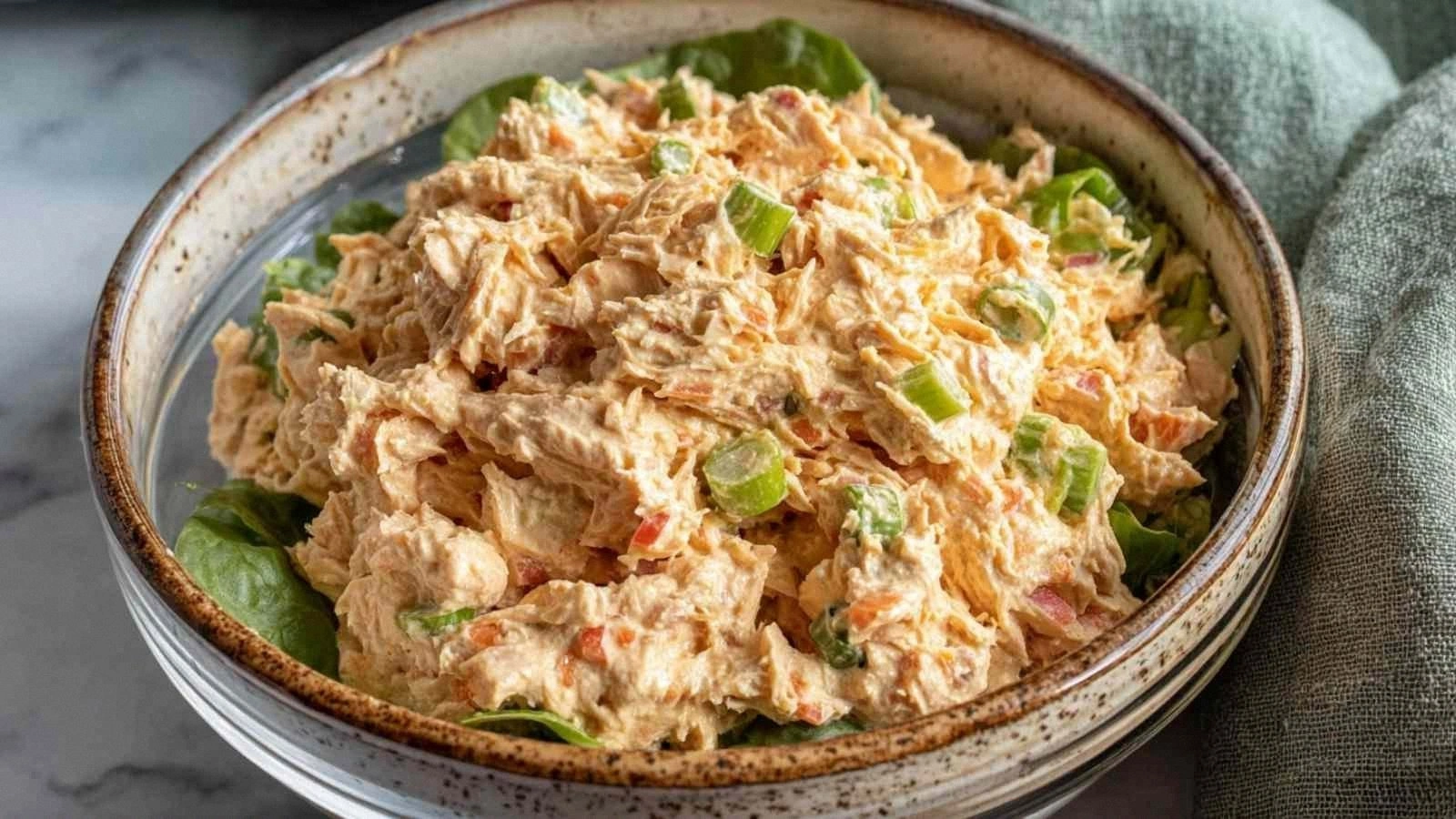
- Add the Buffalo sauce to the tuna mixture. If you prefer a milder heat, start with two tablespoons and taste before adding more. The sauce should coat the tuna like a glossy, fiery glaze. The visual cue: the mixture should have a deep, vibrant orange hue.
- Pour in the lemon juice and stir until the mixture is evenly moist. The citrus should give a bright, almost citrusy aroma that cuts through the heat. Be careful not to over‑mix, or the tuna will become mushy. The texture should be creamy yet chunky.
- Fold in the cottage cheese, using a spatula to keep the mixture light. The cottage cheese should melt into the tuna, creating a silky binder that holds everything together. If the mixture feels too thick, add a splash of water or a drizzle of olive oil to loosen it.
- Season with garlic powder, paprika, kosher salt, and black pepper. Mix gently, ensuring the spices are evenly distributed. The seasoning should taste like a subtle chorus that amplifies each bite. Taste the salad and adjust if needed.
- Cover the bowl and refrigerate for at least 30 minutes to let the flavors meld. This resting period allows the celery to absorb some moisture, maintaining its crunch. The salad will be even more flavorful after the chill.
- Serve immediately over a bed of fresh lettuce, in a tortilla wrap, or tossed with whole‑grain pasta. If you’re plating, arrange the salad on a clean plate and garnish with a sprinkle of extra paprika for a pop of color. The presentation should feel inviting and appetizing.
- Enjoy while it's still fresh and crunchy. The combination of heat, tang, and creaminess creates an unforgettable taste that will keep you coming back for more. This is the moment of truth—taste it, and you’ll know you’ve made something special.
That's it — you did it. But hold on, I've got a few more tricks that'll take this to another level…
Insider Tricks for Flawless Results
The Temperature Rule Nobody Follows
Many people leave tuna salads at room temperature, but the heat from the Buffalo sauce can cause the tuna to become soggy. Refrigerating the salad for at least 30 minutes locks in the crunch of celery and keeps the tuna firm. A quick chill also amplifies the tang of lemon, making the dish taste fresher. If you’re in a hurry, a 10‑minute chill in the fridge is still better than serving straight from the bowl.
Why Your Nose Knows Best
Before you taste the salad, give it a quick sniff. A bright citrus aroma indicates the lemon juice is fresh and balanced. A lingering fishy smell suggests you might have used stale tuna. Your nose is a reliable guide to the overall freshness of the dish, so trust it.
The 5‑Minute Rest That Changes Everything
After mixing, let the salad rest for exactly five minutes before serving. This brief pause allows the flavors to meld, and the celery to re‑hydrate slightly, giving a better crunch. Many chefs swear by this trick, and it’s simple enough to incorporate into any recipe. The result is a salad that tastes like it was made by a seasoned pro.
Freshness Hack
If you’re using canned tuna, choose a brand with added flavor or a light‑sauce version to reduce the need for extra seasoning. The natural salt in the tuna can help you cut back on the kosher salt, preventing an overly salty finish. This also keeps the calorie count lower.
Portion Control
Measure out portions before mixing if you’re feeding a crowd. This ensures each serving contains the same amount of protein and calories. It’s also a great way to track macros for a fitness‑focused diet.
Creative Twists and Variations
This recipe is a playground. Here are some of my favorite ways to switch things up:
Taco Twist
Fill crunchy taco shells with the salad for a handheld, protein‑rich lunch. The shells add a satisfying crunch that complements the creamy filling. Top with a dollop of Greek yogurt for an extra protein boost. This version is perfect for a quick, on‑the‑go meal.
Pasta Power
Toss the salad with cooked whole‑grain pasta for a hearty, filling dish. The pasta absorbs the sauce, creating a comforting, saucy bite. Add a handful of spinach for added greens and a pop of color. This variation turns the salad into a full‑meal entrée.
Wrap It Up
Wrap the salad in a large lettuce leaf or a low‑carb tortilla for a low‑calorie snack. The wrap adds a fresh, crisp element that keeps the salad from getting soggy. Sprinkle a pinch of chili flakes for an extra kick. This option is ideal for a light lunch or a post‑workout snack.
Mediterranean Medley
Swap the Buffalo sauce for a homemade lemon‑garlic vinaigrette. Add chopped Kalamata olives and feta cheese for a Mediterranean twist. The olive oil brings a silky texture that complements the tuna. This version is perfect for a summer picnic.
Spicy Thai Fusion
Replace the Buffalo sauce with a spicy Thai peanut sauce. Mix in sliced red bell pepper and shredded carrots for crunch. Garnish with chopped cilantro and crushed peanuts. This fusion dish offers a bold, exotic flavor profile.
Breakfast Boost
Serve the salad over a bed of sautéed spinach and top with a poached egg for a protein‑packed breakfast. The egg yolk adds a rich, silky texture that pairs well with the creamy dressing. This variation is a great way to start the day with a satisfying meal.
Storing and Bringing It Back to Life
Fridge Storage
Store the salad in an airtight container for up to 2 days. Keep the dressing separate until ready to serve to maintain the celery’s crunch. When ready to eat, give it a quick stir and adjust seasoning if needed. The salad retains its flavor and texture when refrigerated properly.
Freezer Friendly
The salad can be frozen for up to 3 months. Pack the dressing in a small freezer bag and the tuna mixture in a separate container. Thaw overnight in the fridge before serving. Freezing slightly softens the celery, so consider adding fresh celery before serving for a crisp bite.
Best Reheating Method
If you need to warm the salad, microwave on low for 30 seconds, then stir. Add a tiny splash of water or a drizzle of olive oil to keep the mixture moist and prevent it from drying out. Reheat gently to preserve the delicate balance of flavors. The salad will taste almost as fresh as when first made.